
The Age of Background Entertainment: How Streaming Has Made Watching Effortless and Forgettable
April 7, 2026
We live in a time when studios have decided that entertainment doesn’t have to be surprising, challenging, or moving; it just needs to be occupying. “Netflix producers reportedly instruct screenwriters to make plots as obvious as possible to avoid confusing viewers who are half-watching” (Thompson).
This philosophy impacts the quality of entertainment itself. Characters no longer speak to each other so much as they explain themselves for the audience’s benefit.
Take the Irish Wish: in the film, Lindsay Lohan tells her lover, “We spent a day together. It was a beautiful day filled with dramatic vistas and romantic rain, but that doesn’t give you the right to question my life choices. Tomorrow I’m marrying Paul Kennedy.” He responds: “Fine, that will be the last you see of me because after this job is over I’m off to Bolivia to photograph an endangered tree lizard.”
No one talks like this. It isn’t dialogue, it’s exposition dressed up as conversation. Entertainment is now made with the assumption that audiences have it in the background. What this reveals is a broader shift toward passive viewership.
What is Passive Viewership?
Passive viewership is the act of consuming entertainment without fully engaging with it. It’s watching while scrolling, cooking, or doing chores. Content becomes background entertainment rather than a focal experience.
The rise of streaming has completely reshaped how we engage with the media. A successful show is no longer defined by emotional impact or cultural relevance, but by how long it stays on your screen.
This shift towards passive viewership has resulted in content being built around it. Netflix even has a micro-genre labelled “casual viewing.” Much of today’s entertainment isn’t designed to challenge audiences. It isn’t even designed to be fully watched. It’s made to fill silence, to run in the background, to occupy space. And in doing so, it has drastically reshaped expectations for quality.
How has binge watching culture changed everything?
Binge watching culture on streaming services has fundamentally changed how stories are told. Cable television used to follow a three-act structure built around ad breaks, but streaming shows are built to keep going. The priority is continuation over structure.
The autoplay option on platforms has gotten rid of natural stopping points in episodes; as one ends the next one will start immediately. There is no real pause to reflect or process what you just watched.
Cliffhangers used to be occasional. Now they show up in almost every episode. They are not there to deepen the story as much as they are there to make sure you keep watching.
In binge watching culture, the worst outcome is not confusion… It is turning something off.
What type of shows is streaming prioritizing?
Streaming platforms increasingly prioritize low cognitive demand content: stories that are easy to follow even when only half-watched.
These shows tend to rely on familiar tropes and predictable structures, with explicit dialogue and clearly stated motivations that leave little room for ambiguity. In a world shaped by passive viewership, the less effort a show requires, the more likely it is that someone will keep it on.
Example #1: The Electric State
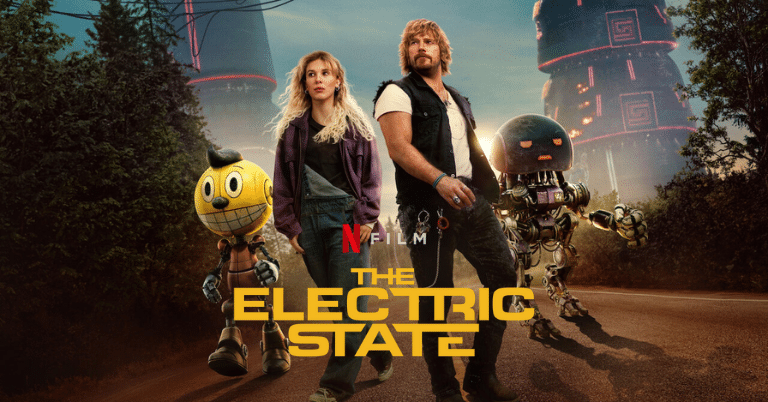
How many people have heard of this film?
The Electric State is the kind of movie someone might stumble across while mindlessly scrolling on Netflix. At first, it’s surprising to see a cast led by Chris Pratt and Millie Bobby Brown, with direction from the Russo Brothers, the filmmakers behind some of the biggest blockbusters ever made.
Then comes an even bigger surprise. Its $320 million budget makes it one of the most expensive films ever produced and the most expensive streaming movie ever.
And yet, despite all of that, it remains strangely under the radar, with many people unaware it even exists.
The film isn’t outright terrible. It is something arguably worse, forgettable. Every line, plot point, and character beat feels assembled from a familiar formula. Nothing feels surprising, and nothing lingers afterward.
This reflects the paradox of background entertainment. Massive resources are poured into projects designed to be easily consumed and just as easily forgotten. It highlights a growing disconnect between what audiences actually value and what studios believe keeps them watching.
Example #2: Reality Competition Shows

Reality competition shows are perhaps the clearest expression of passive viewership.
Dating competitions like Too Hot to Handle, baking shows like Nailed It, and countless others, such the surprising Hot Ones: The Game Show are all built for instant comprehension and endless continuation. There are hundreds more you have probably never heard of, quietly streaming in the background on various platforms, each following nearly the same formula.
The success of many reality competitions demonstrates that passive viewership content has a clear place in the media. But when you look at the sheer number of these programs (there’s a show about extreme dog grooming called Pooch Perfect) it becomes clear how much of the industry has shifted toward background entertainment, prioritizing ease and familiarity over narrative depth or complexity.
Background Entertainment, Background Impact
In an industry where no one can reliably predict a hit, studios are increasingly playing it safe. By prioritizing content that is familiar and easy to consume in the background, they’re stripping away what makes a TV show or movie great: starting a conversation and having a cultural impact.
Passive viewership content has its place in the vast world of streaming entertainment. But, when it becomes the default, it starts to change the landscape altogether.
Audiences don’t just want something to occupy their time. They want something to feel.
They want to be surprised. They want to be challenged.
And most of all, they want a reason to pay attention.
