
Why Hollywood is leaving Hollywood: the great FIlm migration
For years, the advice was simple, “if you’re going to make it, you have to make it to Hollywood.” The images are iconic: white palm trees, orange studio lots, stars in the sky and in coffee shops. Being in Hollywood defined success in the entertainment industry.
But today, these images are merely a romanticized illusion to the truth: Hollywood doesn’t rely on Hollywood. A growing wave of film migration is changing where movies are actually produced. Many big films still choose Los Angeles, such as Marty Supreme, Once Upon a Time in Hollywood, and La La Land. Other major films choose to shoot elsewhere, or simply don’t have the option to call LA its filming location.
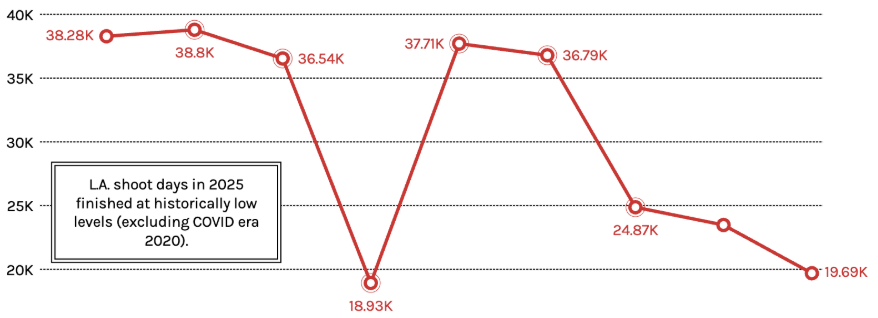
Source: The Hollywood Reporter
Why is Hollywood Leaving Hollywood?
This trend of Hollywood leaving Hollywood comes down largely to economics and practicality.
1. Production costs in LA are extremely high
Filming is more expensive than ever before, and labor, permits and location fees can quickly add onto an already expensive budget. Studios are increasing pressure to manage costs in an overcrowded and unpredictable film market, making more affordable locations highly attractive.
2. Global competition offers better financial incentives
Cities, states, and countries around the world are competing aggressively to attract film productions with generous film tax incentives. These financial benefits make it far more appealing for studios to film outside Los Angeles, even if it means relocating crews and adjusting schedules.
3. Technological advancements enable remote and flexible production
Modern filmmaking no longer requires all stages of production to occur in a single location. Advancements in technology, including digital cameras, tools, and post-production softwares allow studios to shoot in one city while managing editing, visual effects, and sound design elsewhere. This flexibility reduces the reliance on Los Angeles as a central hub.
Where is the Film Industry Moving?
As Hollywood leaving Hollywood becomes more common, new production hubs are rising across the globe.
Cities like London have become major centers for blockbuster filmmaking. A good number of Marvel films are produced across the pond. Meanwhile, US States like Georgia and New Jersey are rapidly expanding their production infrastructure. Major studios have begun building facilities outside of California. For example, Netflix, Paramount, and Lionsgate have built new production studios in New Jersey.
This shift isn’t random; it’s strategic. Studios are choosing locations that maximize value while still delivering high-quality production. A key player in this shift is tax incentives.
What is the Purpose of Film Tax Incentives?
Film tax incentives are the driving force for film migration. These are government-backed programs designed to attract film and television productions by offering financial returns, such as tax credits or rebates.
The goal is to encourage studios to hire local crews and invest in the surrounding economy. When a production comes to a new location, it brings significant economic activity. Film tax Incentives are mutually beneficial systems for filmmakers and the locations.
Instead of choosing locations purely for creative reasons, many productions now prioritize regions offering the most competitive incentives, sometimes saving millions of dollars in the process. The right location can make a company back 20%-50% of its expenses. This has transformed film location into a strategic business decision, with Los Angeles often getting the short end of the stick.
What Does This Mean For Hollywood?
The rise of film migration doesn’t mean Hollywood is disappearing; it means it’s evolving. Los Angeles is still the heart of the entertainment industry. Most film studios, executives, writers, and talent remain there. But the physical act of filming is becoming decentralized.
This film migration does have real consequences. Many jobs tied to on-location production in LA are declining, and the local economy is feeling the effect. LA-based workers such as camera operators, set designers, and costume designers are facing fewer opportunities. Furthermore, local businesses that support production, like catering companies, equipment rental houses, and local vendors, are also seeing a drop in revenue. At the same time, new opportunities are emerging in other regions, expanding access to the industry beyond California.
As film tax incentives continue to shape where productions go, one thing is clear: Hollywood isn’t just a place anymore, it’s a global industry. And while Los Angeles will always remain its symbolic home, the future of filmmaking is happening everywhere.
